 Mentavo
You probably know situations like these:
- You want to look for a new job, but you stay in the old one.
- You want to finally start exercising, but you keep postponing it.
- You dream about starting your own project, but you keep finding reasons to wait.
- You stay in an unhappy situation, even though you know it isn't good for you.
We often interpret this behavior as a lack of motivation, missing discipline, or fear of failure.
But often, something else is behind it.
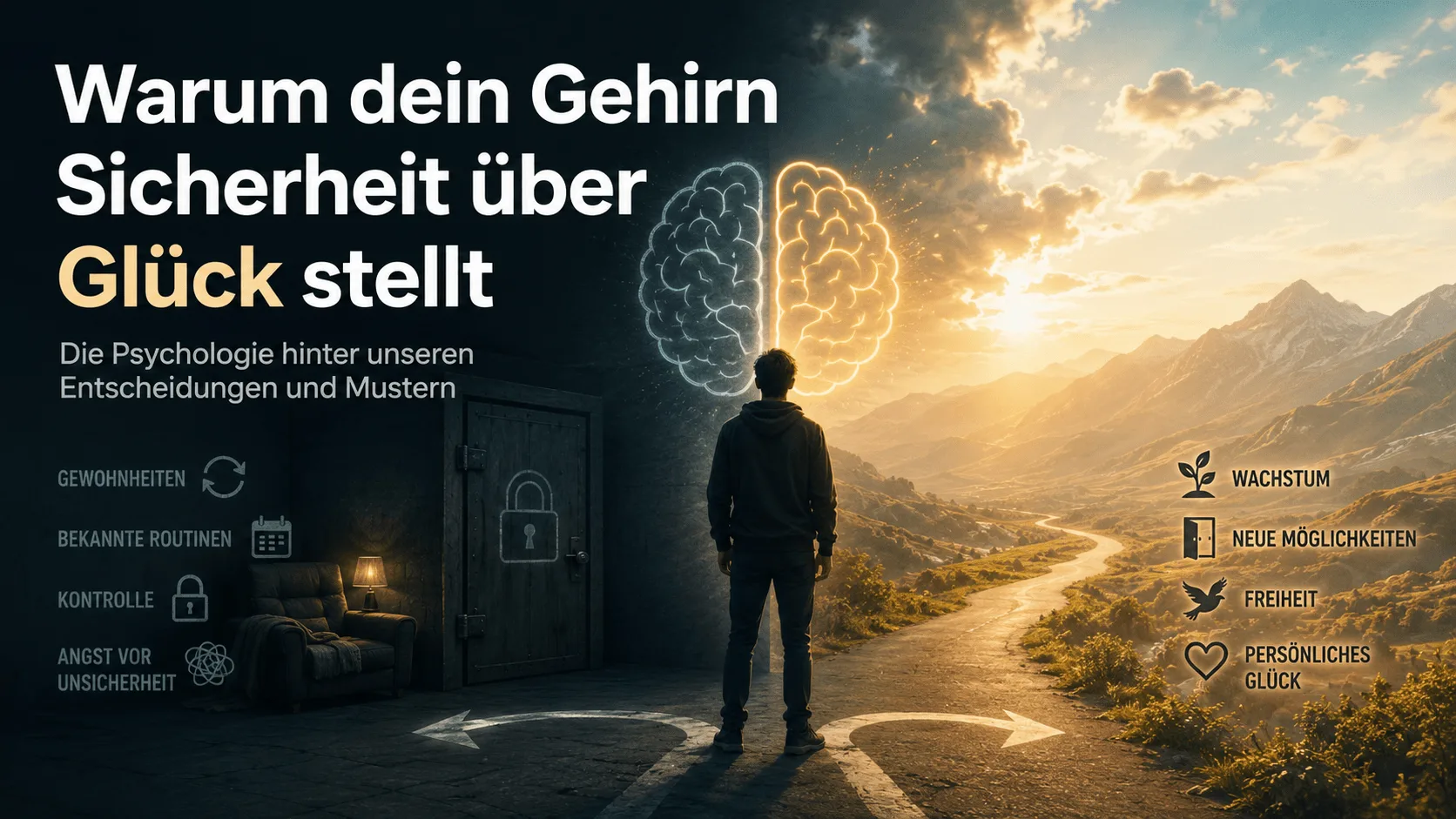
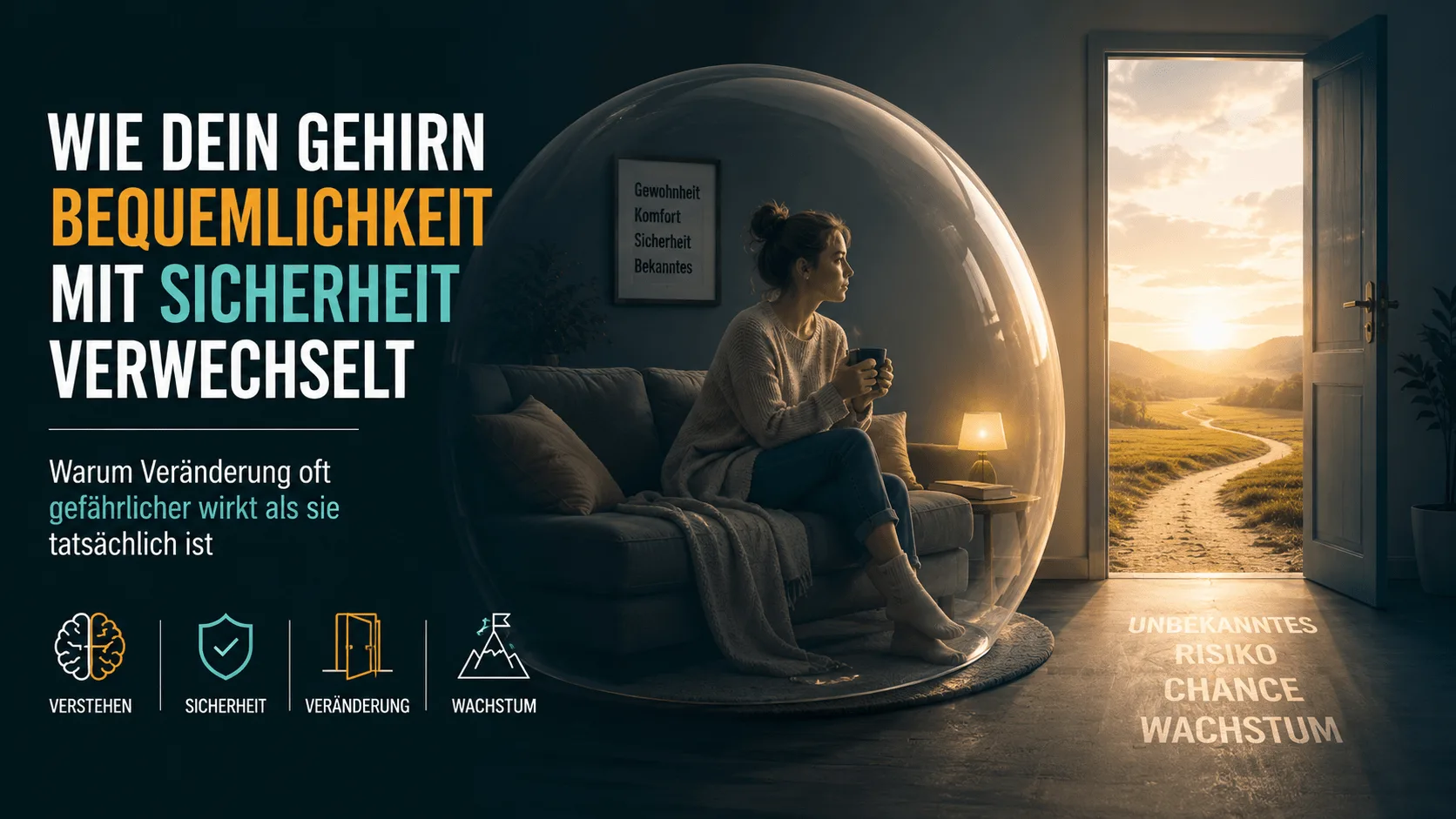
Our brain confuses comfort with safety.
It prefers the familiar over the unknown — even when the familiar makes us unhappy.
This leads to a paradoxical state:
Many people would rather stay in a known dissatisfaction than step into an unknown possibility.
In this article, you'll learn why our brain works this way, why change often seems more threatening than it actually is, and how you can overcome this inner resistance.
Why our brain views change with suspicion
From an evolutionary standpoint, change was associated with risk for a long time.
For our ancestors, the unknown could mean:
- danger
- scarce resources
- social exclusion
- physical threats
That's why the brain developed one central task:
Ensure safety.
The problem:
Our brain doesn't distinguish especially well between physical danger and psychological uncertainty.
That's why situations like:
- changing jobs,
- a new hobby,
- an important conversation,
- a career reorientation,
can trigger stress responses similar to actual threats.
Familiar doesn't automatically mean good
One of the brain's biggest thinking traps:
Familiarity often gets equated with safety.
But that equation isn't always correct.
Examples:
- An unhealthy relationship can be familiar.
- Constant stress can be familiar.
- Negative self-talk can be familiar.
- Procrastination can be familiar.
The brain often prefers these states anyway.
Not because they're good.
But because they're known.
And what's known feels predictable.
The comfort zone isn't a place of growth
The comfort zone is often misunderstood.
It isn't automatically something negative.
It offers:
- stability
- predictability
- mental relief
It only becomes a problem once it turns into a permanent limitation.
Many people confuse the following feelings:
- Comfort
-
"I know this."
- Safety
-
"This is good for me."
These two things aren't the same.
Sometimes there's a considerable gap between them.
Why fear of change often seems irrational
Imagine you want to take a new career path.
Your brain might produce thoughts like:
- "What if it doesn't work out?"
- "What if I fail?"
- "What if I make the wrong decision?"
Interestingly, it asks much less often:
- "What if it works out?"
- "What if I grow?"
- "What if I become more content?"
That's due to what's called negativity bias.
Our brain pays more attention to potential dangers than to possible opportunities.
Evolutionarily, that made sense.
Today, it often leads to risks being overestimated and opportunities being underestimated.
The hidden cost of standing still
Many people see change as risky.
But they rarely ask the opposite question:
What does it cost me if I don't change?
For example:
- staying in an unsuitable job for years
- ignoring health problems
- postponing personal goals
- continuing burdensome relationships
Non-decisions have consequences too.
Often, even bigger ones than the change itself.
Why small changes succeed more often than radical overhauls
The brain reacts especially sensitively to large amounts of uncertainty.
That's why many radical changes fail.
For example:
- a completely new life routine
- extremely strict diets
- instant personality changes
- unrealistic goals
Small changes, by contrast, create less resistance.
They signal to the brain:
"There's no danger here."
That's why small steps are often more sustainable than big leaps.
The psychology of the safety illusion
An interesting observation:
People often feel safe even when objective uncertainty exists.
Example:
Someone stays in a job that makes them unhappy for years.
Why?
Because the situation is predictable.
But predictability doesn't automatically mean safety.
In fact, long-term dissatisfaction, stress, or a lack of development can represent significant risks.
Yet the brain often rates the familiar higher than the potentially better.
How self-reflection dissolves the comfort-zone trap
The first step is to consciously question your own thoughts.
Questions like:
- What exactly am I afraid of?
- How realistic is this scenario?
- What evidence supports it?
- What evidence contradicts it?
- What is the current situation costing me?
help distinguish between real risks and mental assumptions.
Often, it turns out:
The biggest danger doesn't lie in change.
It lies in permanent standstill.
How Mentavo can help
Change rarely begins with a single brave step.
It begins with awareness.
This is exactly where Mentavo comes in.
- Daily reflection creates clarity
-
Many fears feel overwhelming as long as they only exist in your head.
Regular reflection makes thoughts more tangible.
- Journaling makes thinking errors visible
-
Anyone who writes down their worries often recognizes:
Many fears are based on assumptions rather than facts.
- Goals create orientation
-
Change feels less threatening when there's a clear direction.
Mentavo helps translate big goals into concrete steps.
- Habits reduce resistance
-
Small daily actions make change considerably easier.
Instead of changing everything at once, lasting progress forms through repetition.
- AI-supported reflection opens new perspectives
-
Mentavo helps you look at fears, uncertainties, and thought patterns from a new angle.
This often leads to solutions that were previously hidden.
7 ways to overcome the fear of change
-
Name the concrete fear
Vague worries seem bigger than concrete risks.
-
Question worst-case scenarios
How likely are they, really?
-
Consider the cost of not acting
Standing still is also a decision.
-
Start with the smallest possible step
Mini-changes reduce resistance.
-
Gather new experiences
New experiences correct old assumptions.
-
Don't expect complete safety
Safety often only forms through action.
Not before it.
-
Document your progress
Visible development strengthens trust in the process of change.
Conclusion: What's familiar isn't always right
Our brain pursues a simple goal:
Protecting us from risk.
But in doing so, it makes a decisive mistake.
It often rates familiarity higher than actual growth.
As a result, many people stay longer than they'd like in situations they actually want to change.
Not because they're incapable.
But because the unknown initially seems more dangerous than it actually is.
The truth is:
Most positive changes feel uncertain at first.
Not because they're wrong.
But because they're new.
That's why, with important decisions, you shouldn't just ask yourself:
"Does this feel safe?"
But also:
"Does it only feel safe because I already know it?"
Because sometimes the biggest opportunity lies exactly behind the fear your brain mistakenly treats as a warning.