 Mentavo
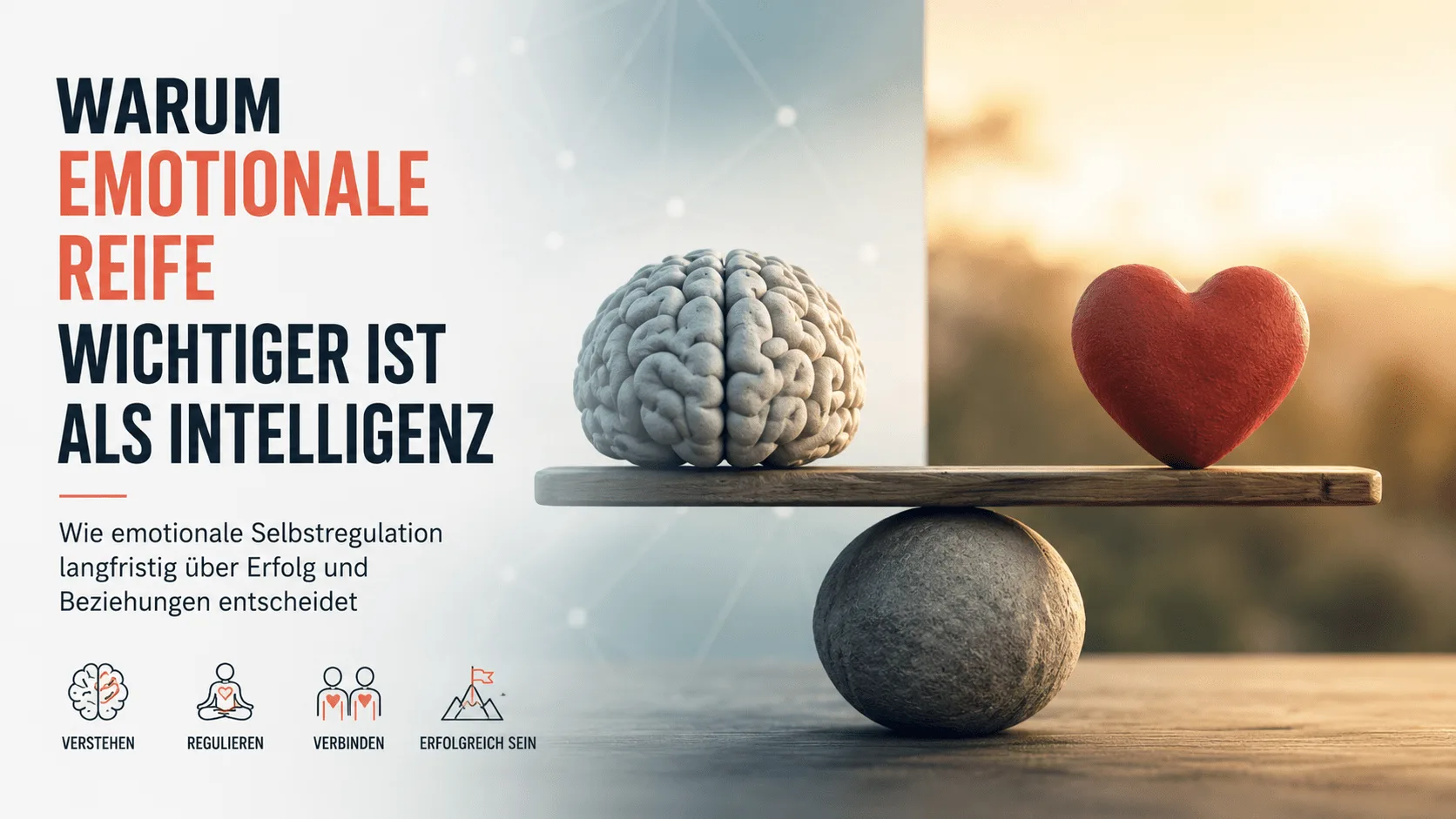
For decades, intelligence has been treated as one of the most important factors in success.
Good grades, high IQ scores, analytical thinking, and technical competence are considered the keys to career, achievement, and personal development.
But if you look closely at successful leaders, happy relationships, or people with high life satisfaction, something stands out:
The most intelligent people aren't automatically the most successful.
The smartest people don't necessarily have the most stable relationships.
And the people with the most knowledge aren't automatically the happiest.
What often makes the bigger difference in the long run is something else:
Emotional maturity.
The ability to understand your own emotions, regulate them, and consciously deal with challenges is increasingly becoming one of the most important skills of the 21st century.
In a world full of uncertainty, information overload, and constant change, emotional stability often shapes success and quality of life more than raw intelligence.
What does emotional maturity actually mean?
Emotional maturity doesn't mean being constantly calm or positive.
It also doesn't mean suppressing emotions.
Rather, emotional maturity describes the ability to
- notice your own feelings,
- understand emotional reactions,
- take responsibility for your own behavior,
- resolve conflicts constructively,
- act with the long term in mind instead of impulsively.
An emotionally mature person experiences the same feelings as anyone else:
- fear
- anger
- disappointment
- frustration
- insecurity
The difference lies in how these feelings are handled.
Intelligence doesn't explain human behavior
Many people assume that smart decisions automatically come from high intelligence.
Reality looks different.
Everyone knows situations like:
- Someone makes bad decisions despite knowing better.
- An intelligent person reacts impulsively to criticism.
- Conflicts escalate even though both sides understand the facts.
- People sabotage their own goals.
Why?
Because knowledge and behavior are two different things.
You can know exactly what would be right — and still act differently.
Emotions often influence decisions more strongly than logic.
The real difference shows up under pressure
In everyday life, intelligence and emotional maturity often look similar.
The difference becomes visible when challenges arise.
For example:
- criticism at work
- conflicts in relationships
- setbacks with personal goals
- financial problems
- uncertainty and change
In situations like these, emotional maturity often has a stronger effect than intelligence.
The decisive question then isn't:
"What do I know?"
But:
"How do I handle what's happening right now?"
Why emotional self-regulation is so important
Emotional self-regulation describes the ability to consciously manage feelings without suppressing them.
That means:
- pausing instead of reacting impulsively,
- reflecting instead of escalating,
- understanding instead of projecting.
People with strong self-regulation can experience intense emotions without being controlled by them.
They act more consciously.
As a result, they often make better decisions in the long run.
Emotional maturity shapes relationships
Many relationships don't fail because of a lack of love.
They fail because of a lack of emotional maturity.
Typical problems are:
- defensiveness instead of understanding
- blame instead of responsibility
- withdrawal instead of communication
- impulsiveness instead of reflection
Emotional maturity shows especially clearly in conflicts.
It shows in
- listening,
- developing understanding,
- admitting your own mistakes,
- having difficult conversations respectfully.
People often remember less of what was said.
They remember how they felt.
That's why emotional maturity shapes the quality of relationships more than intelligence does.
Emotional maturity shapes career success
In the modern workplace, social skills are becoming increasingly important.
AI can provide knowledge.
Search engines deliver information in seconds.
Expert knowledge is becoming ever easier to access.
What's harder to automate are skills like:
- self-leadership
- empathy
- conflict management
- emotional stability
- communication
Leaders in particular aren't primarily evaluated for their knowledge.
They're evaluated for their ability to handle people.
Emotional maturity, then, becomes a decisive career factor.
The most common signs of emotional immaturity
Emotional immaturity often shows up in everyday situations.
For example:
- Looking for blame elsewhere
-
Instead of taking responsibility, outside circumstances are blamed.
- Not being able to tolerate criticism
-
Every piece of feedback is experienced as a personal attack.
- Impulsive decisions
-
Emotions drive actions without enough reflection.
- Difficulty with boundaries
-
Your own needs get ignored, or other people's boundaries get disregarded.
- A constant sense of victimhood
-
The feeling of being at the mercy of life prevents personal growth.
The traits of emotionally mature people
Emotional maturity doesn't mean perfection.
Rather, the following traits often show up:
- Self-reflection
-
The ability to honestly question your own behavior.
- Responsibility
-
Problems aren't exclusively sought outside yourself.
- Patience
-
Short-term emotions don't dictate every decision.
- Empathy
-
Other perspectives can be understood.
- Willingness to learn
-
Mistakes are seen as opportunities for growth.
Why emotional maturity is becoming more important than ever today
The digital world intensifies emotional challenges.
Social media encourages:
- comparison
- sensory overload
- quick reactions
- emotional polarization
At the same time, uncertainty is rising due to:
- technological change,
- AI,
- economic upheaval,
- social change.
People who can regulate their emotions have an enormous advantage as a result.
They stay able to act, while others get overwhelmed by stress, fear, or frustration.
How Mentavo can foster emotional maturity
Emotional maturity doesn't develop overnight.
It develops through continuous self-observation and conscious reflection.
This is exactly where Mentavo comes in.
Daily check-ins create awareness
Many emotional patterns run automatically.
Regular reflection makes them visible.
Anyone who recognizes their feelings can respond to them more consciously.
Journaling supports emotional clarity
Writing down your thoughts helps
- organize emotions,
- recognize triggers,
- make recurring patterns visible.
Many people only recognize, through regular journaling, which situations are actually weighing on them.
AI-supported reflection
Mentavo helps you better understand emotional connections and develop new perspectives on challenges.
This often leads to valuable insights about your own thinking and behavioral patterns.
Goals and habits strengthen self-leadership
Emotional maturity ultimately shows up in action.
Clear goals and conscious habits help you act with the long term in mind instead of impulsively.
7 ways to actively develop emotional maturity
-
Name your feelings
Emotions often lose intensity once we consciously notice them.
-
Pause between stimulus and reaction
Not every emotion has to be turned into action right away.
-
Take responsibility
Ask yourself:
"What's my share in this situation?"
-
See feedback as an opportunity to learn
Criticism doesn't have to be a threat.
-
Understand your own triggers
Strong emotional reactions often contain important clues about unresolved issues.
-
Reflect regularly
Self-reflection is one of the strongest levers for personal growth.
-
Think long-term
Emotional maturity often means setting short-term impulses aside in favor of long-term goals.
Conclusion: The future belongs to emotionally mature people
Intelligence remains important.
Knowledge remains valuable.
But in a world where information is available at any time, a different skill becomes ever more decisive:
The ability to lead yourself.
Emotional maturity influences:
- our relationships,
- our decisions,
- our careers,
- our mental health.
It determines how we handle setbacks, resolve conflicts, and cope with challenges.
That's why the decisive question isn't:
"How intelligent am I?"
But:
"How well can I handle my own emotions?"
Because lasting success rarely comes from knowledge alone.
It comes from the ability to act consciously, thoughtfully, and responsibly, even in difficult moments.
And that's exactly where the real strength of emotionally mature people lies.