 Mentavo
Every year, millions of people decide to change their life.
They want to:
- exercise more,
- eat healthier,
- become more productive,
- spend less time on their phone,
- read more,
- save money,
- finally pursue their goals.
The motivation is high.
So is the hope.
But after just a few weeks, many give up.
Studies and surveys have shown a similar picture for years:
Most good intentions don't fail after months — they often fail within the first few weeks.
So the question isn't:
"Why do people set goals?"
But:
"Why do we find it so hard to stick with them long-term?"
The answer has less to do with a lack of discipline than with the way our brain works.
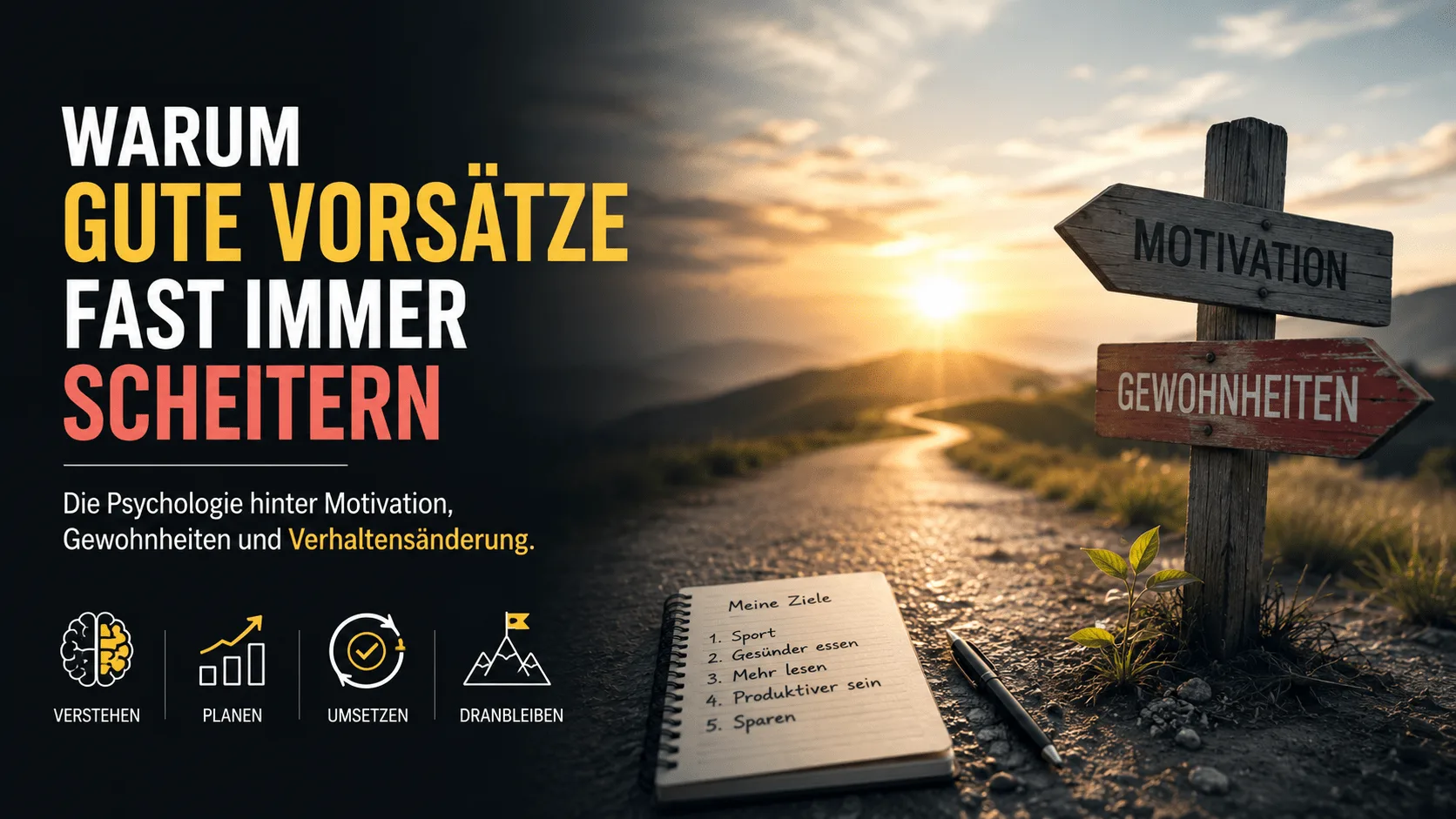
In this article, you'll learn why good intentions so often fail, which psychological mechanisms are behind it, and how you can make lasting behavior change actually work.
The real problem: we overestimate motivation
Many people believe:
"If I'm just motivated enough, I'll manage it."
But motivation is one of the most unstable resources there is.
It fluctuates daily.
Sometimes even hourly.
On some days, we feel full of energy.
On others, we'd rather postpone everything.
Anyone who builds their goals exclusively on motivation makes their success dependent on a factor they can barely control.
That's why many resolutions already fail once the initial excitement fades.
Why motivation alone doesn't work
Motivation often arises from emotion.
For example:
- New Year's
- an inspiring book
- a motivating video
- a crisis
- a personal turning point
But emotions are temporary.
The problem:
Most people plan their future based on their current level of motivation.
They assume their future self will be just as motivated as they are today.
That's rarely the case.
As soon as stress, everyday life, or unexpected challenges show up, motivation often disappears faster than expected.
The brain loves habits
Our brain is designed to conserve energy.
That's why it automates behavior.
Habits are essentially energy-saving programs.
They let us
- drive a car,
- brush our teeth,
- walk,
- carry out everyday tasks,
without having to consciously think about it constantly.
The problem:
Unwanted behaviors also turn into habits.
For example:
- constant scrolling on social media,
- putting off important tasks,
- emotional eating,
- negative self-talk.
The brain prefers familiarity.
Even when it harms us in the long run.
Why big changes usually fail
Many resolutions start with extreme expectations.
For example:
- two hours of exercise every day.
- never eating sugar again.
- getting up at 5am every morning.
- reading a chapter every day.
- being perfectly organized immediately.
The problem:
The bigger the change, the stronger the brain's resistance.
Big changes create:
- more mental load,
- more decisions to make,
- more frustration,
- more setbacks.
This increases the likelihood that we give up.
The identity trap: why goals alone aren't enough
Many people focus exclusively on outcomes.
For example:
- lose 10 kilograms
- write a book
- learn a language
- become more successful
But lasting change often begins on a different level.
Not with what we want to achieve.
But with the question:
"Who do I want to become?"
People stick with new habits noticeably longer when those habits become part of their identity.
For example:
- "I want to read more" versus
- "I'm someone who reads regularly."
Or:
- "I want to exercise" versus
- "I'm an active person."
Behavior becomes more stable when it matches your own self-image.
Why setbacks are normal
One of the biggest causes of failed resolutions is perfectionism.
Many people think:
"If I skip one day, I've failed."
But lasting change doesn't work in a straight line.
Setbacks are part of the process.
Successful people often aren't different because they never fail.
They're different because they keep going after setbacks.
Consistency beats perfection.
Almost always.
The psychology of successful habits
Research on behavior change shows similar patterns again and again.
Successful habits are:
- Simple
-
The simpler a behavior is, the more likely it is to be carried out.
- Visible
-
Reminders and triggers increase the likelihood of an action.
- Repeatable
-
Small daily actions work more powerfully in the long run than rare peak performances.
- Rewarding
-
The brain repeats behaviors that produce positive experiences.
Why self-reflection often gets skipped
Many people set goals.
But few regularly check their progress.
This creates problems:
- Patterns stay invisible.
- Setbacks don't get analyzed.
- Successes don't get consciously noticed.
Self-reflection is therefore one of the most underrated success factors.
Anyone who reflects regularly
- recognizes obstacles earlier,
- understands their own behavior patterns better,
- can adjust their strategies deliberately.
How Mentavo can help
Lasting change rarely comes from motivation alone.
It comes from clarity, repetition, and self-reflection.
This is exactly where Mentavo comes in.
Making goals visible
Clear goals help you keep long-term development in view.
Instead of acting impulsively, orientation forms.
Building habits step by step
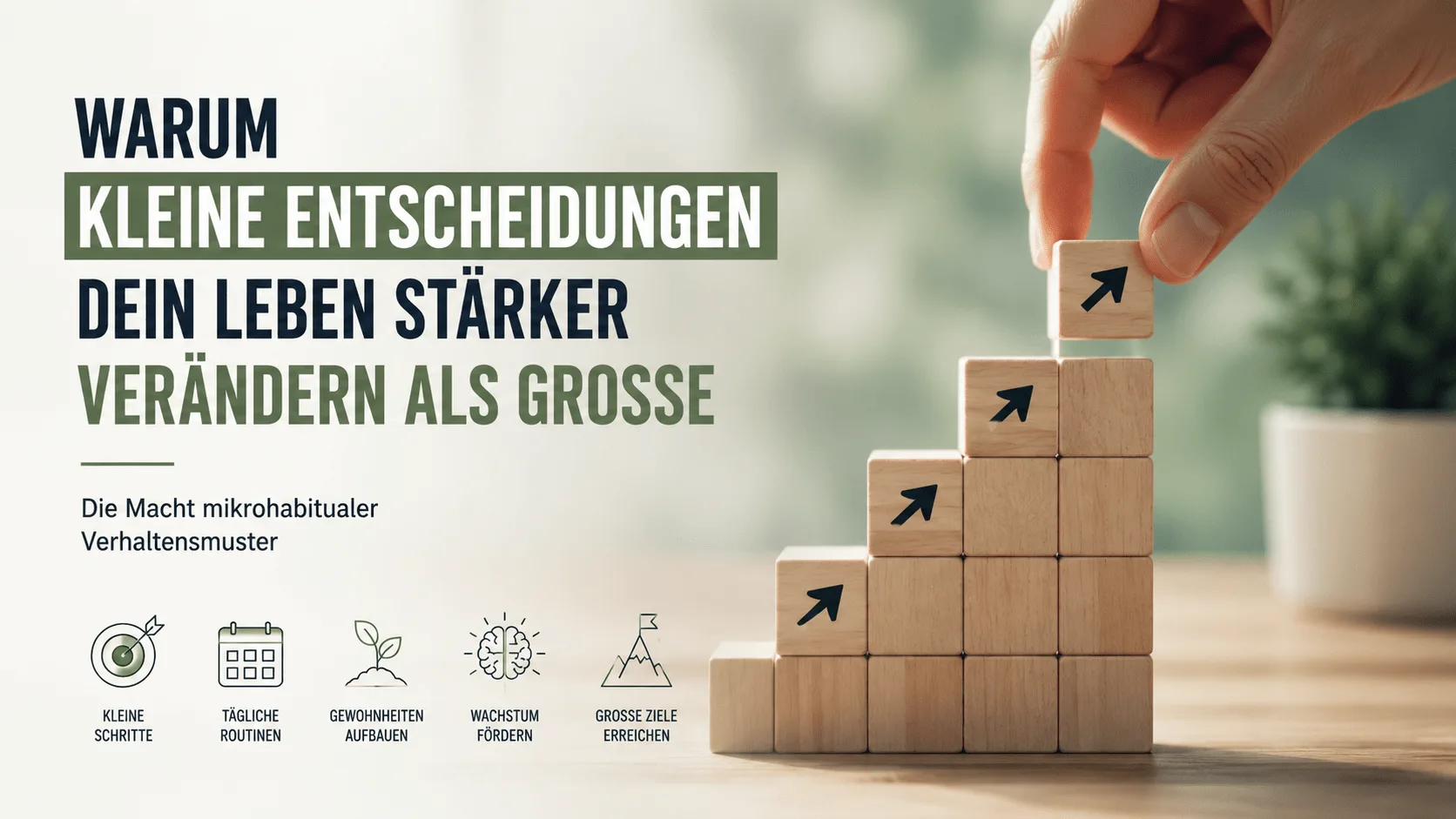
Mentavo helps you establish small daily actions that enable big changes over time.
The focus isn't on perfection.
It's on consistency.
Daily check-ins support self-awareness
Regular reflection makes visible:
- What's working?
- What's blocking me?
- Which patterns keep repeating?
This leads to better decisions.
Journaling strengthens lasting change
Writing down thoughts, feelings, and progress creates clarity and increases the likelihood of sticking with your goals over time.
AI-supported reflection
Mentavo's coaching features help you recognize patterns, understand your motivation better, and develop new perspectives on personal challenges.
7 strategies to make good intentions actually work
-
Start smaller than necessary
If a goal seems too easy, that's often a good sign.
-
Focus on systems instead of goals
Goals set the direction.
Systems create progress.
-
Link new habits to existing routines
New behaviors stick more easily when they're attached to existing habits.
-
Plan for setbacks
Setbacks are part of the process, not the end of it.
-
Make progress visible
People stay more motivated when they can see their own development.
-
Reflect regularly
Anyone who understands their own behavior can change it deliberately.
-
Think long-term
Lasting change happens over months and years — not days.
Conclusion: Good intentions don't fail from a lack of willpower
Most people already know what they should be doing.
The real problem isn't a lack of knowledge.
It's the assumption that motivation will hold up on its own indefinitely.
But motivation starts change.
Habits sustain it.
Anyone who wants to grow in the long run doesn't need perfect discipline.
They need:
- realistic systems,
- small daily steps,
- self-reflection,
- patience.
That's why the decisive question isn't:
"How motivated am I today?"
But:
"Which small behavior can I repeat today so the person I want to be tomorrow can exist?"
Because lasting change rarely begins with one big decision.
It begins with small actions, repeated often enough.