 Mentavo
Every day, countless moments disappear.
Thoughts that exist for only a few minutes.
Conversations we can barely recall weeks later.
Feelings that were intense but never captured.
Insights that could have changed our life if we hadn't forgotten them.
The human memory is remarkable.
But it's also flawed.
We forget constantly.
Not because we're inattentive. Not because we don't try hard enough.
But because forgetting is a natural part of how our brain works.
Yet for the first time in history, that could change.
Not through a better memory.
But through artificial intelligence.
Memories have always been incomplete
Many people think of their memories like recordings.
As if past events were stored somewhere in the brain and later played back exactly as they happened.
In reality, memory works very differently.
Every time we remember something, the brain reconstructs the past anew.
Details disappear.
Meanings shift.
Emotions color memories.
That doesn't mean our memory is bad.
It means memory is more like a story than a recording.
We don't remember our life.
We remember our interpretation of our life.
The limits of human memory
Imagine someone asked you:
How did you feel on a Tuesday seven months ago?
What worries did you have?
What thoughts occupied your mind?
What goals mattered to you back then?
Most people could barely answer these questions.
And yet exactly these thoughts and feelings shaped their decisions.
A large part of our life doesn't disappear because it was meaningless.
It disappears because it was never documented.
The emergence of a second memory
This is exactly where a development begins that could become more and more important in the coming years.
AI systems are becoming increasingly capable of storing and analyzing thoughts, conversations, emotions, goals, and behavioral patterns over long periods of time.
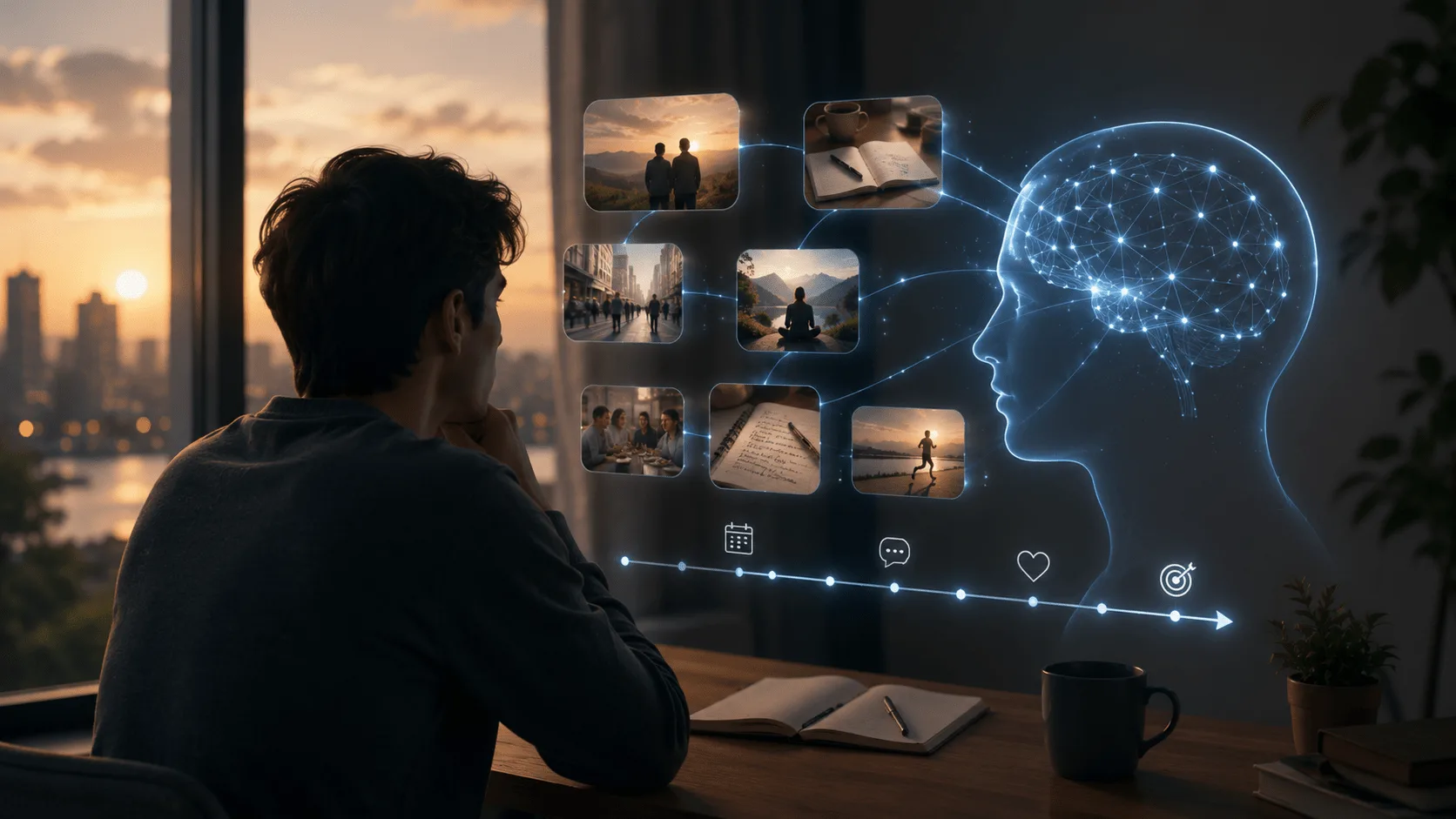
For the first time, something is emerging that could be called a second memory.
A memory that doesn't forget.
A memory that recognizes patterns.
A memory that can connect years to one another.
Not just individual events.
But a person's whole story.
Why this is more than just data storage
At first glance, this sounds like a technical development.
More data.
More storage space.
More information.
But the real change is psychological in nature.
Because memory shapes identity.
People understand themselves through their past.
Through stories.
Through experiences.
Through patterns.
If an AI can make these patterns visible, something new emerges:
A more objective perspective on your own life.
Maybe it recognizes that certain fears always show up in the same situations.
Maybe it reveals how goals have shifted over the years.
Maybe it makes visible which decisions led to lasting happiness and which didn't.
Not because the AI knows the person better.
But because it can remember things people have long since forgotten.
The danger of a perfect memory
But this development also raises an important question.
Isn't forgetting sometimes useful?
Not every memory deserves to stay permanently present.
The brain forgets for good reason.
Forgetting creates space.
It reduces complexity.
It helps people move forward.
A perfect memory can be a burden.
People with exceptional memory abilities often report having a hard time letting go of painful events.
The future, then, won't just be about storing more.
It will also be about wisely choosing what actually matters.
When AI becomes a mirror
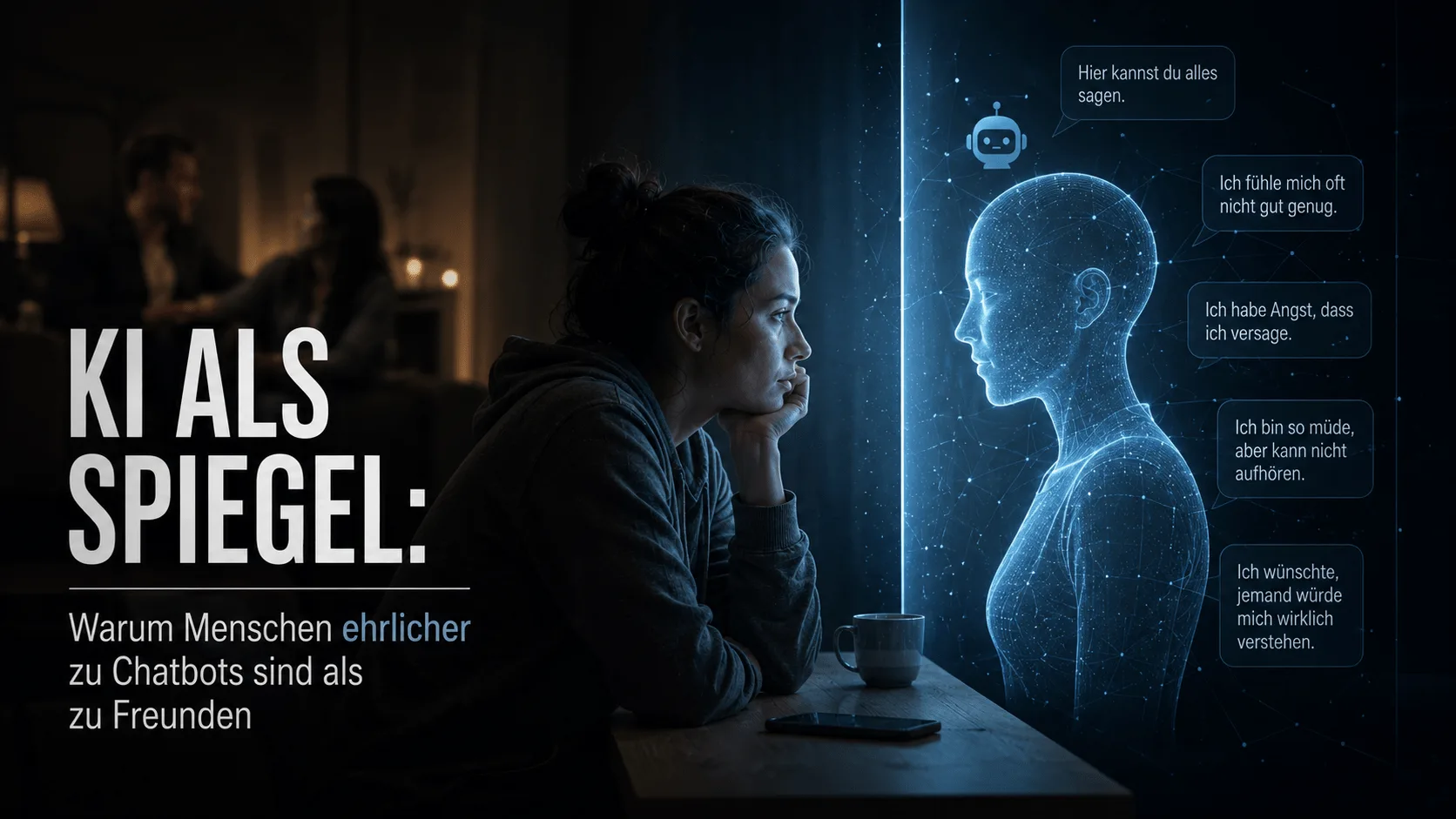
Maybe the greatest strength of such systems isn't storing information.
It's making connections visible.
People mostly see their life from the perspective of the current moment.
They experience individual days.
Individual problems.
Individual decisions.
AI, by contrast, can recognize patterns across years.
It can make developments visible that are barely perceptible to the human eye.
Individual thoughts add up to a pattern.
Individual emotions add up to a story.
Individual days add up to identity.
The philosophical question behind it
This development leads to a fascinating question:
Who are you, really?
Are you the person you remember being?
Or the person you actually were?
A significant gap can exist between these two versions.
People forget mistakes.
They alter memories.
They soften the past.
Or they view their own story through the lens of their current feelings.
An AI could, in theory, hold a more precise version of that story than we ourselves do.
Not because it's more human.
But because it forgets less.
Why self-reflection becomes more important
The more information becomes available, the more important the ability to reflect becomes.
Because data alone doesn't create understanding.
A journal full of entries doesn't automatically create insight.
Thousands of memories don't automatically create wisdom.
Meaning only emerges through reflection.
Self-knowledge only emerges through connections.
The real challenge of the future, then, won't be storing memories.
It will be understanding them.
Why Mentavo is heading exactly in this direction
Mentavo is built on a simple idea:
People understand themselves better when they can see their own development.
Through journaling, reflection, and intelligent pattern recognition, something like a personal memory gradually takes shape.
Not to capture every single moment.
But to make the important connections visible.
Which themes have followed you for years?
Which goals are changing?
Which patterns keep repeating?
Which thoughts keep resurfacing?
Mentavo isn't trying to replace your memory.
It's extending it.
Maybe we'll understand ourselves better
The future of memory probably won't consist of AI knowing everything about us.
The more interesting possibility is a different one.
That it helps us recognize things about ourselves we never could have seen alone.
That it makes patterns visible.
Explains connections.
Documents development.
And maybe, at some point, takes on the role of a second memory.
Not as a replacement for our humanity.
But as a tool that helps us see our own story more clearly.
Because in the end, it's not about remembering everything.
It's about understanding the things that have truly shaped our life.